
The first time someone handed me a small jar of kefir grains, I genuinely thought I was being given some kind of science experiment. They looked like tiny cauliflower florets floating in milk, and I remember being a little afraid to touch them, worried I’d somehow kill this weird little culture on day one. More than a decade later, I still have grains descended from that same original batch, and I’ve used them in everything from my morning smoothie to the sourdough starter behind half the recipes on this site.
If you’ve just gotten your first batch of kefir grains, or you’re still deciding whether to try them, this guide covers everything I wish someone had told me on day one: what these strange little clusters actually are, how to use them, how to keep them alive long-term, and what to do when something looks off.
What Are Kefir Grains, Exactly?
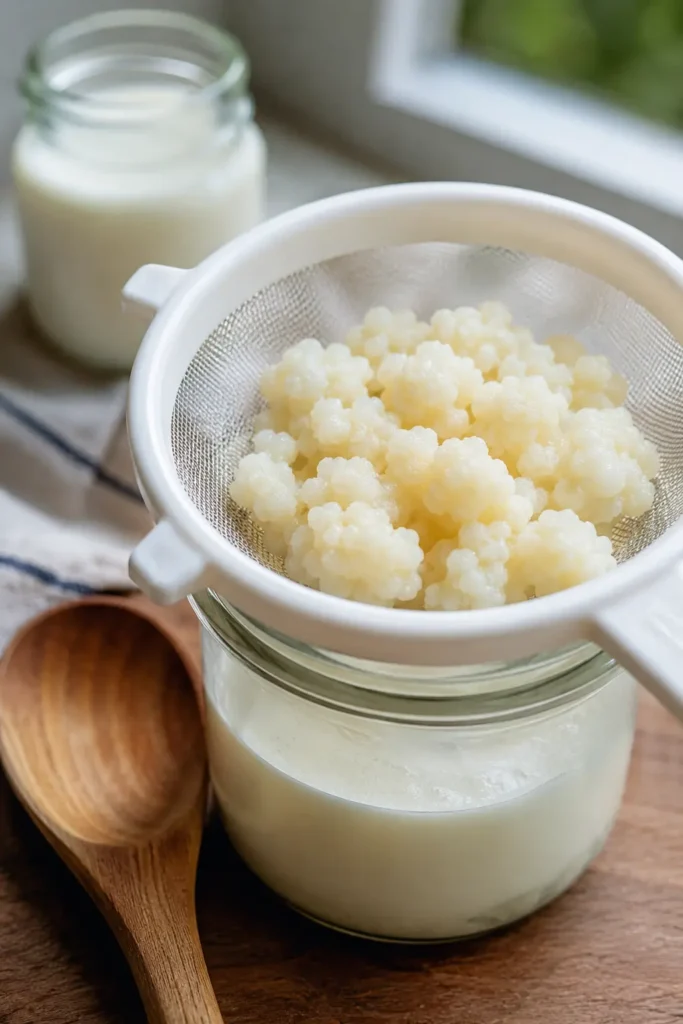
Kefir grains are not cereal grains at all, despite the name. They’re small, gelatinous clusters of bacteria and yeast, held together by a substance called kefiran, that ferment milk into kefir. In appearance, they genuinely do look like small, rubbery pieces of cauliflower, ranging anywhere from the size of a grain of rice to a small walnut.

When you add these grains to fresh milk, the bacteria and yeast inside them feed on the lactose (milk sugar), producing lactic acid and a small amount of carbon dioxide. This is what gives finished kefir its tangy flavor, slightly thickened texture, and gentle fizz. Because the grains are a living culture, you strain them out after each batch and reuse them again and again, and with basic care, they can keep producing kefir indefinitely.
Milk Kefir Grains vs. Water Kefir Grains
These two types are often confused, but they’re genuinely different cultures suited to different jobs.
| Milk Kefir Grains | Water Kefir Grains | |
|---|---|---|
| Appearance | Creamy white, gelatinous, cauliflower-like | Clear or translucent, more crystal-like |
| Used with | Dairy milk (cow, goat, sheep) | Sugar water, coconut water, or fruit juice |
| Contains | Protein-based matrix, larger bacterial diversity | No dairy protein, smaller bacterial diversity |
| Best for | Traditional milk kefir, kefir-based baking | Dairy-free, carbonated fermented drinks |
If you’re dairy-free, water kefir grains are the better starting point, since milk kefir grains need lactose to stay active long-term and will gradually weaken in non-dairy milk.
How to Use Kefir Grains (Basic Method)
How to Use Kefir Grains (Basic Method)
Materials
- 1 tbsp tbsp active kefir grains
- 2 cups cups whole milk dairy or goat
Instructions
- Combine grains and milk: Place 1 tablespoons tbsp active kefir grains in a clean glass jar. Add 2 cups cups whole milk (dairy or goat), leaving an inch of space at the top.
- Cover loosely: Cover the jar loosely with a breathable lid, like a coffee filter secured with a rubber band. This lets gas escape while keeping bugs and dust out.
- Ferment 24-48 hours: Leave the jar at room temperature, out of direct sunlight, for 24 hours to 48 hours. The kefir is ready when it thickens slightly and smells pleasantly tangy.
- Strain the grains out: Pour the mixture through a plastic or nylon strainer set over a bowl. Gently stir with a non-metal spoon to help the liquid pass through, leaving the grains behind in the strainer.
- Store kefir, restart grains: Transfer the strained kefir to a clean jar or bottle and refrigerate. Place the grains in a fresh jar with new milk to start your next batch right away.
Notes
Once you have a healthy batch, using them is genuinely simple: combine them with fresh milk, let the mixture sit at room temperature until it thickens and smells tangy, then strain the grains out and repeat with fresh milk. Most batches take 24 to 48 hours, depending on your kitchen’s temperature and how active your grains are.
Where to Buy Kefir Grains
You have two realistic options:
- From a friend or local fermentation group. Because healthy kefir grains multiply over time, many kefir-makers end up with more than they need and are happy to share. Local fermentation or homesteading Facebook groups are a good place to ask.
- From a reputable online seller. Live kefir grains (not the dehydrated packet starters) tend to establish faster and produce more consistent results. Look for sellers with good reviews and clear shipping/care instructions, since the grains are alive and can be stressed by rough handling in transit.
Avoid buying from sellers with no reviews or unclear sourcing, since kefir grains that arrive weak or contaminated can take weeks to recover, if they recover at all.
How to Care for Your Kefir Grains Long-Term
- Feed them regularly. Fresh milk every 24 to 48 hours keeps grains active and healthy.
- Use non-metal tools. Metal spoons and strainers can react with the culture over time; stick to plastic, wood, or silicone.
- Watch them grow. Healthy grains multiply. When you have more than you need for your usual batch size, either share the extra, eat them (yes, they’re edible), or freeze them for later.
- Give them a break when needed. If you’re not making kefir for a week or more, store the grains in a jar of milk in the fridge, where fermentation slows down significantly.
- Freeze for longer breaks. Grains can be frozen in milk for several months to a year, though you may lose a small percentage of the culture and it will take a little time to fully reactivate once thawed.
Troubleshooting Common Kefir Grain Problems
My grains aren’t producing much kefir. This usually means they’re either too cold, too new, or slightly weak from shipping. Give them a few consistent feeding cycles at room temperature before judging their performance.
My kefir separated into curds and a yellowish liquid. This is normal and simply means the batch fermented a bit longer than ideal. The yellowish liquid is whey; you can stir it back in or drain it off, whichever texture you prefer.
My kefir smells like yeast or beer. A mild yeasty smell is normal and comes from the yeast strains in the culture. A strong, unpleasant smell paired with pink, orange, or fuzzy spots means contamination, and that batch should be discarded.
My grains seem to be shrinking or producing less over time. This can happen with inconsistent feeding, non-dairy milk (for milk kefir grains specifically), or metal utensil exposure. Return to consistent dairy feeding with non-metal tools for a few cycles to help them recover.
What to Do With Your Finished Kefir
Once you’ve got a steady supply of kefir, here’s where it can go on Kefir Guide:
- Use it as the tangy base in a Kefir Berry Smoothie
- Swap it into baking, like our Sourdough Kefir Bread
- Explore the full 15 Best Kefir Sourdough Bread Recipes collection, all built around kefir’s tang and moisture
- Learn more about the culture itself in our guide on What Is Kefir?
- Curious about the finished drink’s shelf life? See Can Kefir Go Bad?
FAQs
Can I use kefir grains more than once?
Yes, that’s the entire point. You strain them out of each finished batch and reuse them immediately with fresh milk, ideally indefinitely with proper care.
Are kefir grains the same as a kefir starter culture powder?
No. Live kefir grains are a renewable, reusable culture that lasts indefinitely. Powdered starter cultures are typically single-use or good for only a handful of batches before losing potency.
Can I eat kefir grains directly?
Yes, they’re edible and some people blend them directly into smoothies. They have a mild, slightly tangy flavor and are safe to consume.
How long can kefir grains survive without being fed?
In the refrigerator submerged in milk, grains can typically go one to two weeks without a fresh feeding. For longer breaks, freezing is a better option.
Why did my kefir grains turn pink or orange?
Pink or orange discoloration usually indicates harmful bacterial contamination, not a normal part of the fermentation process. Discard the batch and start fresh with a clean jar and new grains if this happens.

Hi, I’m Natalia Smith, a kefir enthusiast and content writer dedicated to making fermented dairy approachable and enjoyable. My journey with kefir began in my own kitchen, experimenting with recipes and sharing the health benefits I discovered. Through hands-on experience and continuous learning, I aim to provide clear, trustworthy information that helps others embrace the goodness of kefir in their daily lives.