There’s a specific kind of chaos that happens every September when apples take over my kitchen counter, and this loaf is usually the first thing I bake with them. Honeycrisp is my go-to here, mostly because it holds its shape well and doesn’t turn the dough into a soggy mess, which happened to me once with a softer apple variety I won’t name. Lesson learned the hard way.
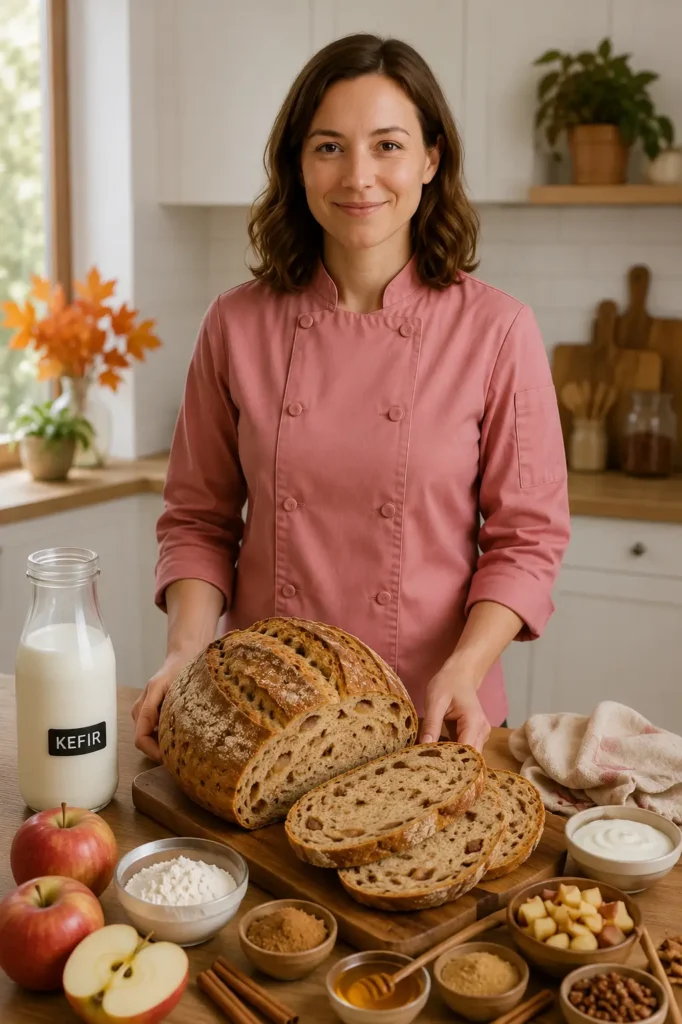
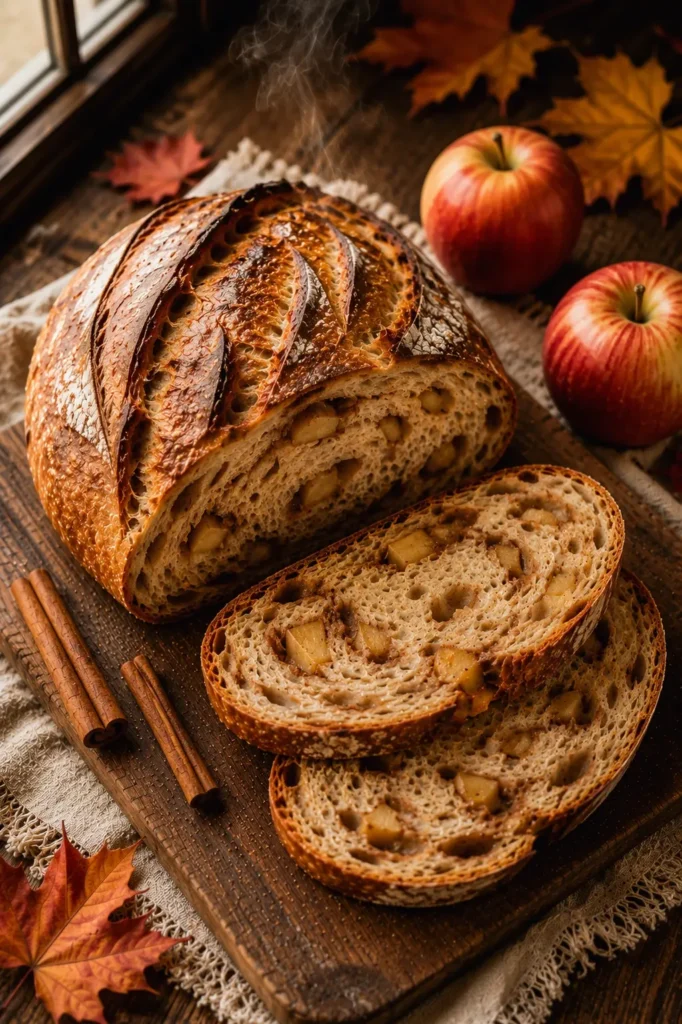
What makes this loaf different from a typical apple cinnamon sourdough is the kefir. It softens the tang just enough that the apples and cinnamon can shine without the loaf tasting overly sour, which is a balance I’ve tweaked more times than I’d like to admit. The finished bread has this beautiful contrast of chewy, tangy crumb against soft, slightly caramelized bits of apple, and cinnamon running through nearly every bite.
Why This Recipe Works
- Kefir softens the tang. The natural sourness in kefir works with the sweetness of the apple and brown sugar, keeping the balance just right.
- Firm apples hold their shape. Using Honeycrisp or Granny Smith keeps the apple pieces intact instead of turning mushy during the long ferment and bake.
- Real cinnamon flavor. Cinnamon is folded directly into the dough, so every slice gets that warm, cozy flavor, not just the crust.
- Naturally fermented. No commercial yeast, just a slow rise that builds real sourdough flavor and a chewy, open crumb.
Basic Equipment You’ll Need
- Kitchen scale – for accurate flour, kefir, and water measurements
- Large mixing bowl – for mixing and bulk fermentation
- Dutch oven – traps steam for a crisp, golden crust
- Banneton or bowl lined with a towel – holds the loaf’s shape while it rests
- Bench scraper – helps handle and shape the dough
- Lame or sharp razor blade – for scoring the top of the loaf
- Parchment paper – makes it easy to lower the dough into the hot Dutch oven
- Wire cooling rack – lets air flow under the loaf as it cools
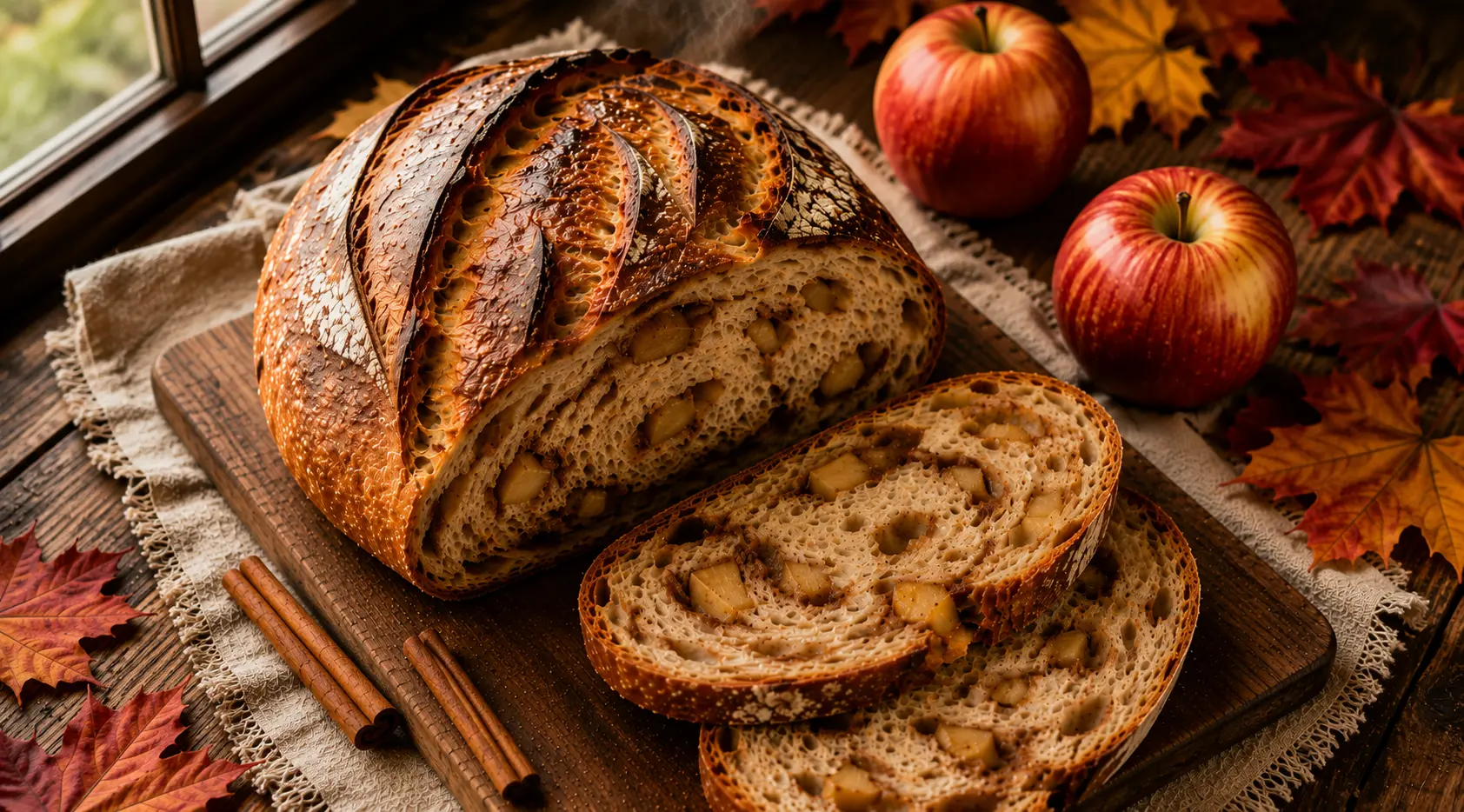
Apple Cinnamon Kefir Sourdough Bread
Ingredients
Equipment
Method
- Mix the dough: In a large bowl, whisk 130 grams plain whole milk kefir, 150 grams water, and 100 grams active sourdough starter together. Add 450 grams bread flour, 50 grams whole wheat flour, and 30 grams brown sugar. Mix until no dry flour remains. Cover and rest 30 minutes.
- Add salt: Sprinkle 9 grams fine sea salt over the dough. Pinch and fold until fully worked in. Cover and rest 30 minutes.
- Stretch and fold: Do 2 sets of stretch and folds, 60 minutes apart.
- Add apple and cinnamon: Toss 150 grams apple (Honeycrisp or Granny Smith), diced and patted dry and 2 teaspoons ground cinnamon in 1 tablespoons extra flour for tossing add-ins. Press the dough into a rectangle, scatter on the apple and cinnamon, then fold and do one more stretch and fold to distribute evenly.
- Bulk ferment: Cover the dough and let it rise at room temperature until it grows by about 50%. This takes 4 to 270 minutes depending on how warm your kitchen is.
- Shape the loaf: Turn the dough onto a lightly floured surface. Shape into a round or oval loaf. Place seam-side up in a floured banneton or bowl lined with a towel.
- Cold retard overnight: Cover the banneton and place it in the fridge for 8 to 480 minutes. This builds flavor and makes the dough easier to score.
- Preheat and score: Preheat your oven to 450°F (230°C) with a Dutch oven inside for 30 minutes. Turn the cold dough onto parchment paper. Score the top with a sharp blade.
- Bake: Place the dough into the hot Dutch oven with the lid on. Bake 45 minutes covered, then remove the lid and bake 20 to 25 minutes more, until deep golden brown.
- Cool completely: Move the loaf to a wire rack. Let it cool for at least 60 minutes before slicing. Cutting too early makes the inside gummy.
Notes
Recipe Details
Why Use Kefir Instead of Water
Kefir adds moisture and a gentle tang that plain water cannot. It works alongside your sourdough starter, not in place of it, the starter is still what makes the bread rise. Use plain, unsweetened whole milk kefir so the apple and cinnamon stay the star flavors.
Choosing the Right Apple
Firm, crisp apples like Honeycrisp or Granny Smith work best here. Softer varieties break down too much during the long fermentation and bake, releasing extra liquid that can make your dough overly wet. Dice the apple into small, even pieces so it distributes well through the dough.
Why You Should Pat the Apples Dry
Even firm apples release some juice once cut. Patting the diced apple dry with a paper towel before adding it to the dough helps prevent excess moisture from throwing off the hydration.
Why the Dough Rests So Long
Sourdough relies on wild yeast in your starter, which works much slower than store-bought yeast. This slow rise, combined with the natural tang from the kefir, is what gives this bread its deep, cozy flavor. Do not rush the process, even on a warm day.
Storing Your Loaf
- Room temperature: Keep in a paper bag or bread box for up to 2 days.
- Fridge: Wrap tightly and store up to 1 week, though the crust will soften.
- Freezer: Slice first, then freeze in a sealed bag for up to 3 months. Toast slices straight from frozen.
Ways to Serve It
Toast a slice and spread on cream cheese or almond butter, or serve it warm with a scoop of vanilla ice cream for a simple dessert. It also makes a wonderful French toast for a fall breakfast.
Recipe Notes
- Use plain, unsweetened whole milk kefir so the apple and cinnamon stay the star flavors.
- Choose firm apples like Honeycrisp or Granny Smith, which hold their shape during baking.
- Pat the diced apple dry with a paper towel before adding it to the dough.
- Make sure your sourdough starter is active and bubbly before you begin. It should double in size within 4 to 6 hours of feeding.
- Do not skip the cold retard step. Resting the shaped dough in the fridge overnight makes it easier to score and deepens the flavor.
- Let the loaf cool for at least 1 hour before slicing so the inside doesn’t turn gummy.
Nutrition Facts
Per slice (based on 12 slices per loaf). Values are estimates.
| Nutrient | Amount |
|---|---|
| Calories | 175 kcal |
| Carbohydrates | 35 g |
| Protein | 5 g |
| Fat | 1 g |
| Saturated Fat | 0.5 g |
| Fiber | 1.5 g |
| Sugar | 6 g |
| Sodium | 190 mg |
Frequently Asked Questions
Can I use a softer apple variety like Fuji or Gala?
You can, but expect a softer, mushier texture and slightly wetter dough, since softer apples release more liquid during baking.
Why did my dough turn out too wet?
This usually means the diced apple wasn’t patted dry enough before being added. Use a paper towel to remove excess moisture first.
Can I use plain yogurt instead of kefir in this recipe?
Kefir is thinner than yogurt and gives the dough a different hydration level and flavor. If you only have yogurt, thin it with a little water first, though the tang will be milder.
Do I need a Dutch oven to bake this bread?
A Dutch oven traps steam and gives the best crust, but you can also bake on a hot baking sheet with a pan of water in the oven to create steam.
Why is my sourdough bread dense instead of airy?
Dense bread is often a sign of an underfed or weak starter, or not enough bulk fermentation time. Make sure your starter doubles in size before you start, and let the dough rise until it looks puffy and full of air pockets.
How do I know when bulk fermentation is done?
The dough should look about 50% bigger, feel light and jiggly when you shake the bowl, and show small bubbles on the surface. Watch the dough, not the clock, since timing changes with kitchen temperature.
More Sourdough Recipes to Try
If you enjoyed this loaf, keep the sourdough baking going with these flavor variations:
- Blueberry Lemon Sourdough Bread
- Cinnamon Raisin Sourdough Bread
- Jalapeño Cheddar Kefir Sourdough Bread
- Chocolate Chip Kefir Sourdough Bread
- Cranberry Walnut Kefir Sourdough Bread
- Garlic Herb Kefir Sourdough Bread
- Everything Bagel Kefir Sourdough Bread
- Honey Oat Kefir Sourdough Bread
- Sun-Dried Tomato Basil Kefir Sourdough Bread
- Feta Spinach Kefir Sourdough Bread
- Maple Pecan Kefir Sourdough Bread
- Pumpkin Spice Kefir Sourdough Bread
You may also like our Sourdough Kefir Bread recipe, and our guide on What Is Kefir? to learn more about the health benefits behind the tang in this loaf. New to sourdough? Start with our complete guide: How to Make a Sourdough Starter With Kefir.
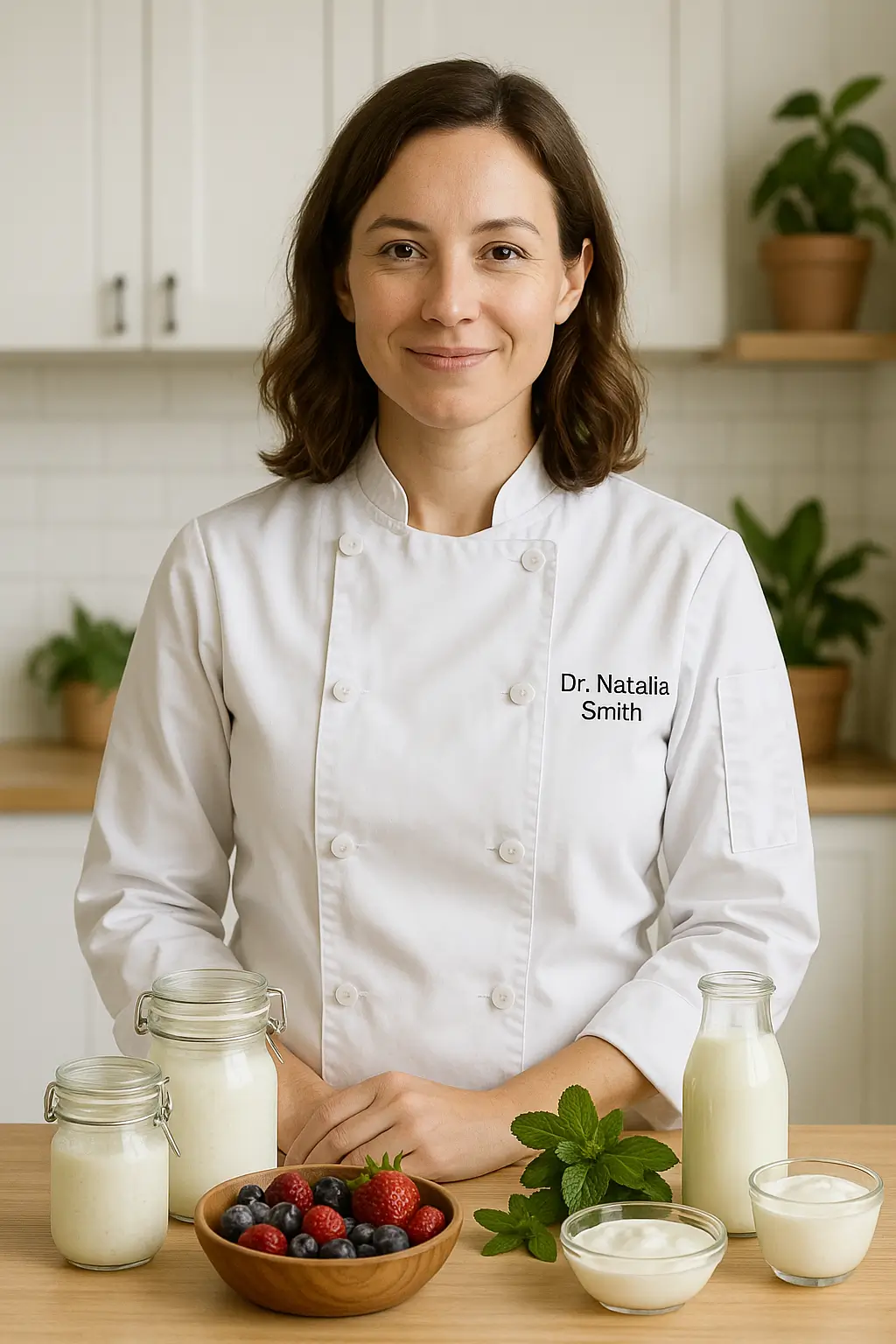
Hi, I’m Natalia Smith, a kefir enthusiast and content writer dedicated to making fermented dairy approachable and enjoyable. My journey with kefir began in my own kitchen, experimenting with recipes and sharing the health benefits I discovered. Through hands-on experience and continuous learning, I aim to provide clear, trustworthy information that helps others embrace the goodness of kefir in their daily lives.