
If you love bread that is soft inside, crusty outside, and full of tangy flavor, you will enjoy this sourdough kefir bread. Unlike traditional sourdough that needs a starter, this recipe uses kefir. That simple change makes the process easier for home bakers who want fresh, homemade bread without long preparation.
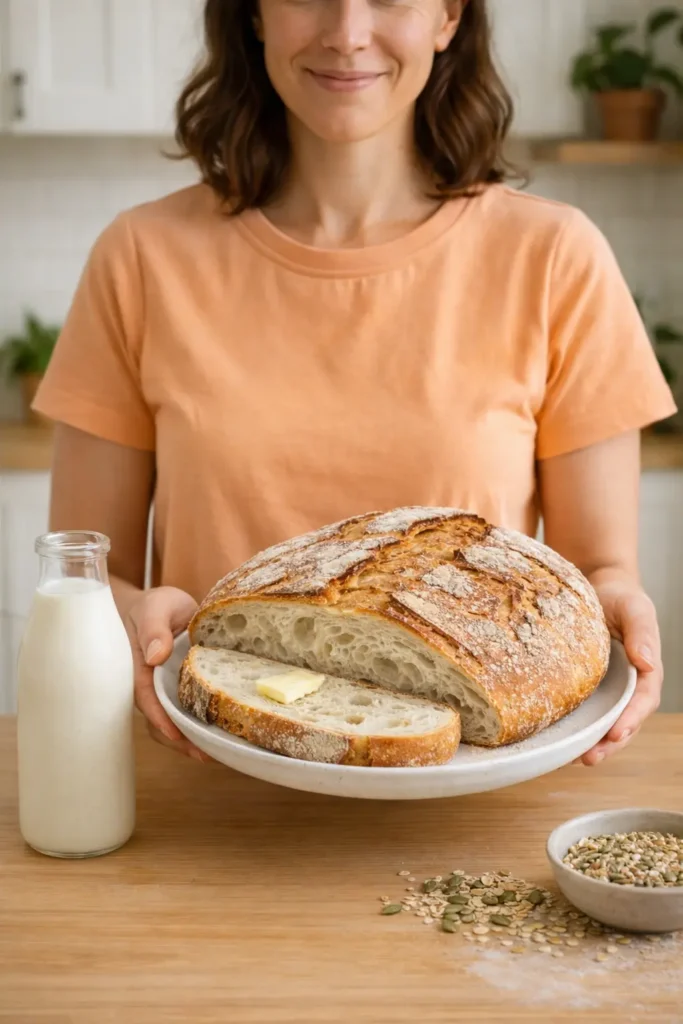
Using kefir also gives the bread a natural probiotic boost, which can support gut health and make the bread easier to digest. You can bake it as a quick kefir sourdough loaf or shape it into a rustic artisan-style bread. Either way, the recipe stays simple, friendly, and full of flavor.
On a quiet morning in my cozy kitchen, I mix flour, kefir, and salt and enjoy the small moment of baking. The dough turns smooth as I stir, and the gentle aroma fills the room. That first warm bite feels comforting and wholesome, and it makes me want to share this easy baking journey with you.
Why Use Kefir in Sourdough?
Kefir is a fermented milk product rich in probiotics and natural yeasts, which help ferment the dough without needing a traditional starter. Compared to classic sourdough starters, kefir is easier to work with and provides a gentle, tangy flavor that pairs perfectly with bread.
Using kefir also brings health benefits: it supports digestion, maintains gut microbiome balance, and can improve bread digestibility. This makes your fermented kefir bread not only tasty but also nutritious.
| Equipment Needed |
|---|
| Large mixing bowl |
| Separate bowl (for dry ingredients) |
| Whisk |
| Measuring cups & spoons |
| Non-stick pan or skillet |
| Large spoon or small ice-cream scoop |
| Two spatulas (for easy flipping) |
| Cooling Rack |
| Paper towel (optional, for excess oil) |
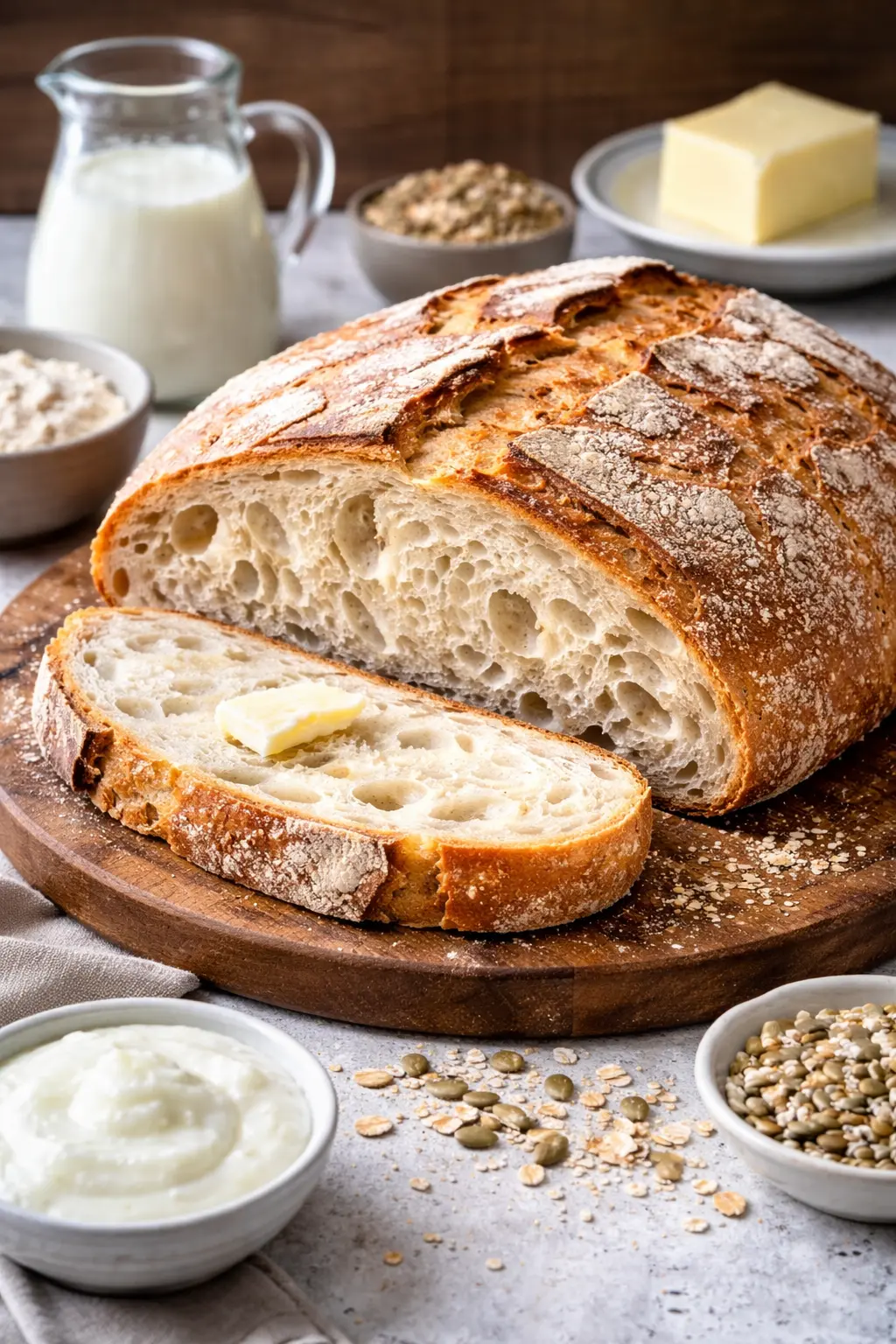
sourdough kefir bread
Ingredients
Equipment
Method
- In a large bowl, combine 3 cups of flour and 1 tsp salt. Stir well so the salt is evenly distributed.
- Pour 1 cup of kefir into the flour mixture. Mix gently with a spoon or spatula until it starts to form a sticky dough.
- If the dough is too dry, add 1–2 tbsp of water at a time until it comes together. The dough should be soft but not too wet.
- Lightly flour a clean surface and knead the dough for about 5–7 minutes until it becomes smooth and elastic.
- Place the dough back in the bowl, cover it with a damp cloth or plastic wrap, and let it rest at room temperature for 2–4 hours, or until it slightly doubles in size.
- Gently punch down the dough to release air. Shape it into a round or oval loaf and place it on a baking sheet lined with parchment paper.
- Brush the top lightly with water or olive oil and sprinkle seeds, herbs, or spices if desired.
- Preheat your oven to 425°F (220°C). Bake the bread for 25–30 minutes, or until the crust is golden brown and the loaf sounds hollow when tapped.
- Let the bread cool completely on a wire rack before slicing. This helps set the texture and keeps it soft inside.
- Slice and enjoy fresh, tangy, soft-inside, crusty-outside kefir bread!
Notes
| Nutrient | Amount per Serving |
|---|---|
| Calories | 150 kcal |
| Total Fat | 2 g |
| Saturated Fat | 0.5 g |
| Trans Fat | 0 g |
| Cholesterol | 0 mg |
| Sodium | 180 mg |
| Total Carbohydrates | 28 g |
| Dietary Fiber | 2 g |
| Sugars | 1 g |
| Protein | 5 g |
| Calcium | 30 mg |
| Iron | 1.2 mg |
| Potassium | 120 mg |
| Probiotics | Yes (from kefir) |
Step-by-Step Instructions
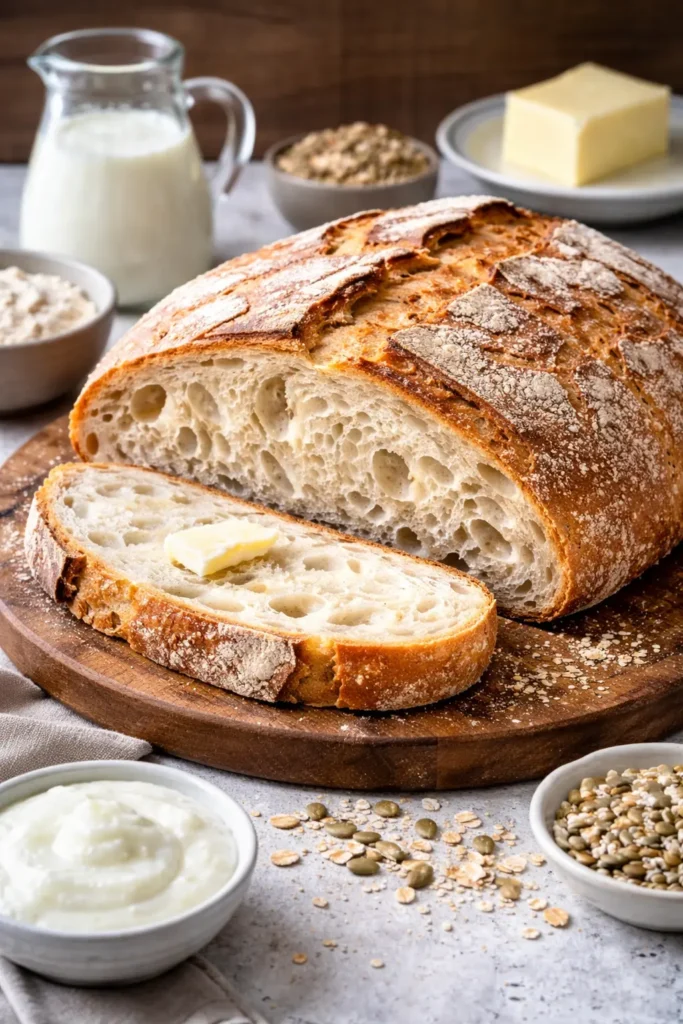
Preparing the Kefir & Starter
- Use low-fat plain kefir or your homemade kefir grains.
- No need to feed a starter, the kefir itself acts as your wild yeast fermentation agent.
- Allow the kefir to sit at room temperature for 15–30 minutes to reach a slightly thicker, tangy consistency.
Keywords: kefir fermentation process, fermented bread
Making the Dough
- In a large bowl, combine flour, kefir, and salt.
- Stir until a sticky, shaggy dough forms. You can use a spatula or your hands.
- Optional: add 1–2 tbsp of extra kefir for wetter dough.
Tips: No kneading required! Just fold gently if desired.
Keywords: tangy bread flavor, kefir sourdough bread
Proofing & Fermentation
- Cover the dough with plastic wrap or a damp cloth.
- Let it rise at room temperature for 4–6 hours, or up to 12 hours for more flavor development.
- For cold-proofing, place in the fridge overnight to slow fermentation and enhance taste.
Keywords: dough proofing, fermentation process
Shaping the Loaf
- Flour your work surface and gently turn out the dough.
- Shape into a round or oval loaf. For rolls, divide dough into 8–10 pieces.
- Optional: brush with egg wash and sprinkle seeds for a decorative crust.
Keywords: kefir sourdough rolls, rustic kefir sourdough
Baking
- Preheat your oven to 450°F (232°C) with a Dutch oven inside.
- Place parchment under dough and transfer into the hot Dutch oven.
- Cover and bake 30 minutes, then remove lid and bake another 15–20 minutes until crusty and golden brown.
- Tap the bottom: a hollow sound means your bread is done.
Semantic Keywords: crusty loaf, chewy sourdough, crusty exterior, soft interior
Cooling & Serving
- Remove bread from oven and let it cool completely on a wire rack.
- Slice and serve plain, or with butter, honey, or your favorite spread.
- Store at room temperature for 2–3 days, or refrigerate/freezer for longer shelf life.
Keywords: homemade bread, artisan bread, quick kefir sourdough bread recipe
Tips for Best Results
- Avoid overproofing, dough should double, not triple in size.
- Adjust hydration depending on flour type; some flours absorb more liquid.
- Using kefir preserves probiotic cultures, even after baking.
- For dense bread, try longer proofing or adjusting flour protein content.
Keywords: gut-healthy sourdough bread, probiotic cultures in bread
Variations & Customizations
- Whole wheat or multigrain for earthy flavor
- Sweet versions: honey, raisins, or pumpkin puree
- Savory: herbs, cheese, or everything bagel seasoning
- Mini rolls or sandwich-sized loaves
Keywords: kefir artisan bread, fermented dairy bread, easy sourdough bread
Nutritional Info (per slice, approx.)
- Calories: 228 kcal
- Carbs: 46 g
- Protein: 9 g
- Fat: 1 g
- Saturated fat: 0.4 g
- Sodium: 731 mg
- Sugar: 2 g
Probiotic content comes from kefir, supporting digestion and gut health.
Keywords: healthy fermented bread, gut microbiome-friendly bread
FAQs
Q: Can kefir replace sourdough starter?
A: Yes! Kefir acts as a natural starter, giving bread its tangy flavor.
Q: How long should I ferment the dough?
A: 4–12 hours at room temperature or overnight in the fridge for deeper flavor.
Q: Why is my bread too dense?
A: Likely underproofed or flour absorbed more liquid, adjust hydration and proof longer.
Q: Can I use non-dairy kefir?
A: Yes, but flavor and texture may vary slightly.

Hi, I’m Natalia Smith, a kefir enthusiast and content writer dedicated to making fermented dairy approachable and enjoyable. My journey with kefir began in my own kitchen, experimenting with recipes and sharing the health benefits I discovered. Through hands-on experience and continuous learning, I aim to provide clear, trustworthy information that helps others embrace the goodness of kefir in their daily lives.